What is AI and How Does it Relate to Micro-applications
Is your team's productivity stagnant, despite technology investments? Most companies struggle with tool fragmentation, where each software solves an isolated problem but creates new silos and complexity. The real question isn't "which tool to use," but rather "how to integrate the right tools to create a cohesive and efficient workflow." This is where the synergy between Artificial Intelligence (AI) and micro-applications becomes the key to unlocking a new level of efficiency and autonomy in daily professional life. #AIandMicroApps #AIVEXLO #Technology #Innovation #Productivity
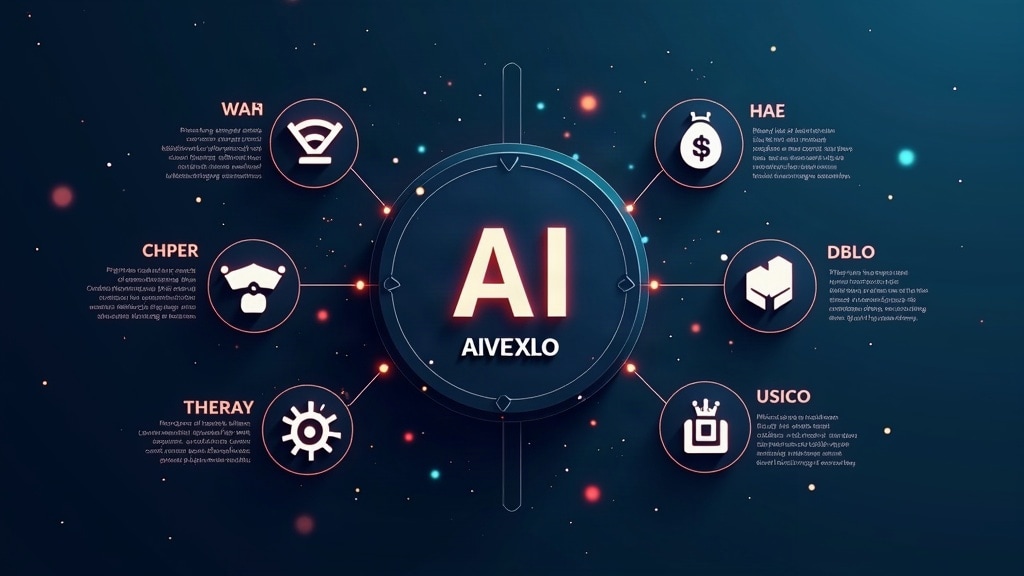
Artificial Intelligence, at its core, is the ability of machines to simulate human intelligence, learning, reasoning, and solving problems.
In a business context, this translates into algorithms that can process large volumes of data, identify patterns, automate repetitive tasks, and even make informed decisions.
However, AI alone can be a complex abstraction. For its power to be truly accessible and transformative, it needs to be encapsulated in practical and targeted formats: micro-applications.
Micro-applications are small software applications, focused on a single specific functionality or a restricted set of tasks.
Think of them as modular components, each performing a vital function.
The relationship between AI and micro-applications is symbiotic: AI confers intelligence and automation capability to these micro-applications, while micro-applications provide a user interface and an operational context for AI to act in a practical and targeted way.
Instead of a monolithic and complex AI, we have an ecosystem of intelligent micro-applications, each optimized to solve a specific problem with the help of AI.
This modular approach allows companies to implement AI solutions more agilely and adaptably.
For example, a micro-application can be dedicated to sentiment analysis in customer interactions, another to marketing content generation, and a third to optimizing sales campaigns.
Each of these micro-applications, powered by AI algorithms, operates independently but can be integrated into a larger workflow to create a comprehensive solution.
This granularity is crucial, as it allows companies to choose and combine the AI functionalities they truly need, avoiding the "overkill" of complex and expensive systems that offer much more than necessary.
The evolution of this partnership is clear: micro-applications make AI consumable and applicable.
An AI algorithm that predicts the likelihood of a lead converting is powerful, but it only becomes useful when integrated into a micro-application that allows salespeople to access that information in real-time in their CRM, or that automates sending a personalized message based on that prediction.
It is the bridge between AI's analytical capability and the practical action that micro-applications provide that truly drives digital transformation.
Benefits of Combining AI and Micro-applications
The fusion of Artificial Intelligence with micro-applications offers a set of tangible benefits that redefine how companies operate, from process optimization to the creation of new business opportunities.
The most immediate and significant impact lies in maximizing operational efficiency and reducing costs.
By automating routine and time-consuming tasks – such as email triage, data entry, lead qualification, or inventory management – AI-powered micro-applications free up valuable human resources to focus on more strategic and creative activities. This not only accelerates task execution but also minimizes human errors, resulting in smoother and more reliable processes.
Beyond efficiency, the combination of AI and micro-applications enables more informed and proactive decision-making.
AI, through its real-time data analysis capability, can provide predictive insights that would be impossible to obtain manually.
A market analysis micro-application, for example, can identify emerging trends or changes in consumer behavior long before they become obvious, allowing companies to adjust their marketing and sales strategies with agility.
This competitive agility is a crucial differentiator in today's market, where the ability to anticipate and respond quickly to changes can mean the difference between success and failure.
Scalability is another key benefit. Micro-applications, by their modular nature, are easier to develop, implement, and scale than monolithic systems.
As a company's needs evolve, new micro-applications can be added or existing ones can be updated without disrupting the overall technological ecosystem.
This flexibility is particularly relevant for growing companies that need solutions that can expand with them.
AI, integrated into these micro-applications, ensures that intelligence and automation scale together, maintaining performance and relevance as data volume and operations increase.
Last but not least, the user experience (UX) is drastically improved.
Instead of interacting with complex systems overloaded with unnecessary features, employees interact with intuitive and focused micro-applications that elegantly solve specific problems. This reduces the learning curve, increases technology adoption, and ultimately improves team satisfaction and productivity.
AI, often operating in the background, makes the experience more "intelligent" and less "manual," creating a more empowering and less frustrating work environment.
Practical Examples in Daily Professional Life
To illustrate the transformative impact of AI and micro-applications, let's consider real-world scenarios in various business areas.
In the marketing domain, for example, an AI micro-application can analyze a potential customer's browsing behavior on the company's website, identify their interests, and then automatically generate personalized content – be it an email, a product suggestion, or even a targeted advertising campaign – all in real-time.
This automation ensures that every interaction is relevant to the individual, significantly increasing conversion rates and return on investment (ROI) in marketing.
In sales, AI micro-applications can revolutionize lead management and the qualification process.
Imagine a micro-application that monitors news feeds and social media to identify companies that show interest in solutions like yours (e.g., references to challenges your product solves).
This micro-application not only identifies potential customers but also collects relevant data about them, such as their role, company, and pain points, presenting them to sales representatives who are already qualified and have valuable context.
This allows sales teams to focus on leads with a higher probability of conversion, optimizing their time and effort.
In customer support, AI and micro-applications can transform the experience.
Intelligent chatbots, powered by AI, can handle a wide range of frequently asked questions, providing quick and accurate answers 24/7.
For more complex issues, a micro-application can analyze the conversation and automatically route it to the most qualified human agent, providing them with a contextual summary of the previous interaction.
This not only improves customer satisfaction but also reduces the agents' workload, allowing them to focus on problems that require human intervention and empathy.
Project management also benefits immensely. An AI micro-application can analyze project progress, identify potential bottlenecks or delays, and suggest adjustments to planning or resource allocation.
It can even predict the likelihood of a project being completed on time and within budget, based on historical data.
This predictive capability allows project managers to act proactively, mitigating risks before they become major problems and keeping projects on track.
In all these situations, the key is specialization: each micro-application is designed for a specific task, but its intelligence derives from AI.
The result is an agile, efficient, and highly responsive system that adapts to the dynamic needs of the business environment.
AIVEXLO as a Success Example
AIVEXLO embodies the vision of an integrated ecosystem of AI and micro-applications, designed to empower B2B businesses.
Its platform offers an AI Operating System that is not just a set of tools, but an architecture designed to create a continuous workflow, from lead generation to invoicing.
AIVEXLO demonstrates how AI, when implemented through focused micro-applications, can transform clicks into revenue, strategically linking content creation, prospecting, and sales.
Within the AIVEXLO ecosystem, we find micro-applications that perfectly illustrate this synergy.
The "Content Machine 1->50," for example, is not just a writing tool; it is an AI micro-application that generates scalable content, tailored to a company's specific marketing and SEO needs.
The "AIVEXLO Design Studio Pro AI" goes beyond image editing, using AI to optimize visual creation, producing photos and videos based on brand guidelines.
These are micro-applications, each with a clear function, but all powered by AI to deliver superior and automated results.
Let's consider the prospecting and sales process.
The "Lead Vault / B2B Extraction Machine" is an AI micro-application that identifies and collects qualified leads, saving hours of manual work.
Once leads are generated, the "Smart CRM & Leads AI" springs into action, not just to manage contacts, but to apply artificial intelligence in qualifying and prioritizing leads.
The "Follow-Up Master" is another crucial micro-application that automates and personalizes the follow-up process, ensuring no lead is forgotten and communication is always relevant.
AIVEXLO's strength lies in how these micro-applications, though specialized, communicate and share data, creating a holistic system.
For example, insights generated by the "AI Brain / Business Brain" — which aligns brand strategy — inform the content campaigns created by the "Content Machine 1->50" and the visuals produced by the "AIVEXLO Design Studio Pro AI".
Leads extracted by the "Lead Vault" are automatically fed into the "Smart CRM & Leads AI" and managed with the "Follow-Up Master".
This interconnection is what allows AIVEXLO to optimize every stage of the sales funnel, ensuring that AI is not just a tool, but a motor for continuous growth.
AIVEXLO's approach validates the thesis that AI, when delivered through well-designed and integrated micro-applications, is the most effective path to digital transformation for businesses.
It's not a generic solution, but an adaptable ecosystem that allows companies to choose and combine the AI functionalities they need to achieve their specific business goals, maximizing efficiency and ROI.
💡 Expert Practical Tip:
When implementing AI solutions and micro-applications, start by identifying your biggest pain points or operational "bottlenecks".
A phased implementation focused on solving one specific problem at a time is more effective than attempting a comprehensive technological revolution all at once.
Comparison: Traditional Approach vs. Optimized Approach with AI and Micro-applications
To solidify the understanding of the benefits, it is useful to compare the traditional way of operating with the optimized approach that AI and micro-applications offer.
This table clearly demonstrates the paradigm shift.
The optimized approach is not limited to doing the same thing faster; it enables doing things that were previously impossible, transforming the nature of work and the company's capabilities.
Challenges and Considerations in Implementation
Despite the evident benefits, the implementation of AI and micro-applications is not without its challenges.
The first and most common is resistance to change within the organization.
Employees accustomed to traditional methods may feel threatened by automation or reluctant to adopt new tools.
It is crucial to address this issue with a robust change management strategy, which includes adequate training, clear communication of benefits, and involvement of teams in the transition process.
The emphasis should always be on how AI complements and empowers human work, rather than replacing it.
Another important consideration is data quality and governance.
AI micro-applications are only as smart as the data they are fed.
Incomplete, inconsistent, or low-quality data can lead to erroneous insights and suboptimal decisions.
Companies must invest in rigorous data collection, cleaning, and management strategies to ensure that AI operates with the best possible information. This involves defining data policies, implementing data governance tools, and training teams on the importance of data integrity.
Data security and privacy are pressing concerns.
When dealing with sensitive customer and company data, it is imperative to ensure that AI micro-applications comply with privacy regulations, such as GDPR, and have robust security mechanisms to protect against breaches.
This includes data encryption, strict access controls, and regular security audits.
Customer trust and brand reputation depend directly on the company's ability to protect its information.
Finally, the selection of micro-applications and their integration into the existing ecosystem can be complex.
With the proliferation of solutions on the market, choosing the right tools that align with specific business needs and can communicate effectively with each other is a challenge.
A prior technological audit, clear definition of requirements, and, if necessary, collaboration with specialized consultants are recommended to ensure a smooth and effective integration.
Interoperability is fundamental to avoid creating new information silos.
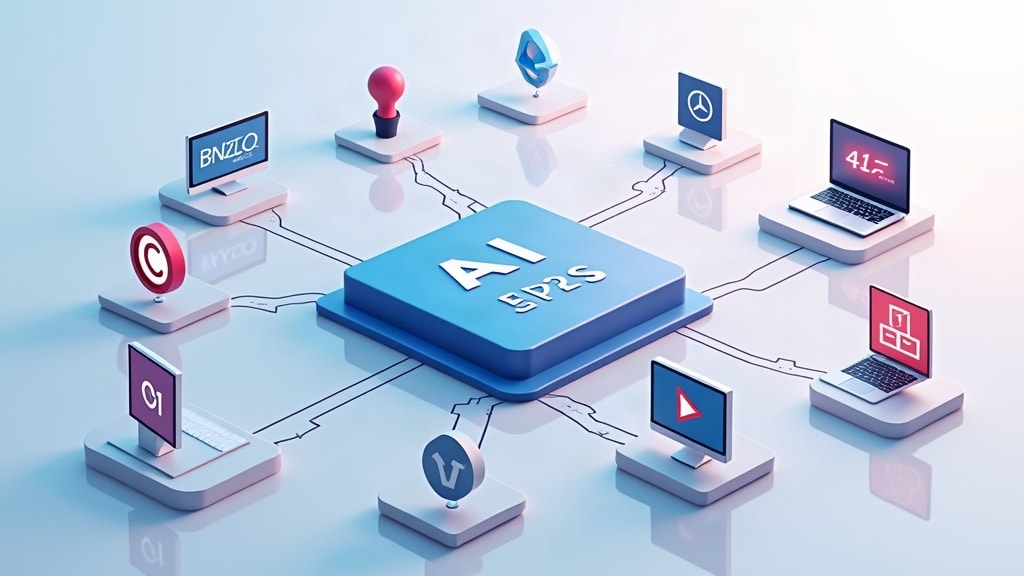
The Future of Productivity with AI and Micro-applications
The future of work is undeniably shaped by Artificial Intelligence and its application through micro-applications.
As technology advances, we can expect these solutions to become even more sophisticated, intuitive, and integrated.
The trend points towards increasingly intelligent ecosystems, where micro-applications not only automate tasks but also anticipate needs, learn from user behavior, and dynamically adapt to constantly changing business environments.
We will see a proliferation of "personalized" AI micro-applications, designed for very specific market niches or to solve highly particular business problems.
This will allow companies of all sizes, including SMEs, to access the power of AI without the need for massive investments in internal development or complex systems.
"Democratization of AI" will be a reality, where any company can leverage this technology to optimize its operations and drive growth.
The collaboration between humans and AI will also evolve.
Instead of replacement, we will see a deeper symbiosis, where AI takes on repetitive and analytical tasks, freeing humans to focus on creativity, strategic thinking, complex problem-solving, and interpersonal interaction.
Micro-applications will act as intelligent assistants, amplifying human capabilities and allowing teams to achieve results that would otherwise be unattainable.
Ultimately, the combination of AI and micro-applications is not just an incremental improvement; it is a fundamental transformation in how businesses operate.
By adopting this approach, organizations will not only increase their productivity and efficiency but also position themselves at the forefront of innovation, ready to face the challenges and seize the opportunities of the future.
It is an investment not only in technology but in human potential and long-term business sustainability.
Frequently Asked Questions (FAQ)
What exactly is an AI micro-application?
An AI micro-application is a small software application, focused on a specific functionality, that incorporates Artificial Intelligence algorithms to automate, analyze, or optimize that task.
For example, an AI micro-application can specialize in generating captions for social media, qualifying leads based on specific criteria, or analyzing the sentiment of customer comments.
Its main characteristic is modularity and specialization.
How can AI and micro-applications help my company generate more leads?
AI and micro-applications can revolutionize lead generation by automating prospecting, qualification, and personalization.
AI micro-applications can analyze market data, identify potential customers based on online behaviors and interactions, and even generate personalized prospecting messages.
Tools like AIVEXLO's "Lead Vault / B2B Extraction Machine," for example, use AI to extract qualified leads, allowing your team to focus on contacts with the highest conversion potential, transforming prospecting from a manual and time-consuming process into a strategic and efficient operation.
Is it necessary to have an in-house AI team to benefit from these solutions?
No, not at all. The beauty of AI and modern micro-applications is that they are designed to be accessible to companies without internal AI teams.
Many solutions are offered as Software as a Service (SaaS), with intuitive interfaces and "plug-and-play" functionalities.
Companies like AIVEXLO provide complete ecosystems where the complexity of AI is abstracted, allowing businesses to use the power of artificial intelligence through easy-to-use micro-applications, without the need for in-depth technical AI knowledge.
The focus is on practical application and business results.
Business Brain: Your Personalized AI
Build an exclusive digital brain trained with your brand identity and voice. Analyze data and generate elite content.
Edmundo Isidro
Co-founder & CTO
Helps businesses and entrepreneurs implement intelligent automations and scale their revenue through elite artificial intelligence solutions.